The Nazarenes: The Sect That Kept the Law
Yeshua
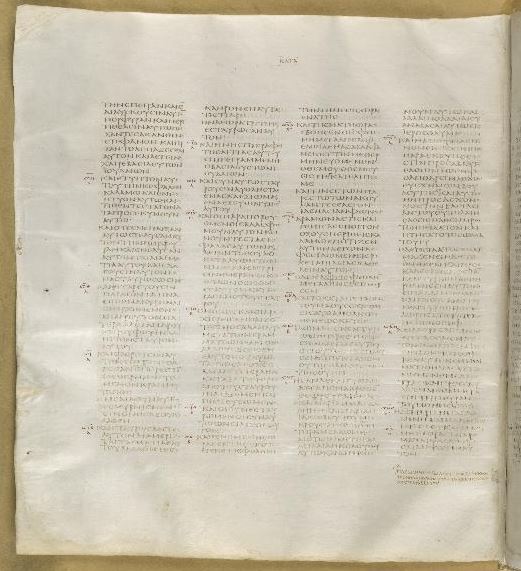
Before anyone was called a Christian, the followers of Yeshua were called something else. In the book of Acts, the lawyer who prosecuted Paul named the movement “the sect of the Nazarenes.” They were Jews. They worshipped the One their fathers worshipped, kept the Torah, and waited for the Kingdom. The church that came later did not count them as its own. It cursed them as heretics.
The name in the book of Acts
When Paul was brought before the Roman governor Felix, the high priest’s lawyer, Tertullus, made the charge:
“For we have found this man a pestilent fellow, an agitator among all the Jews throughout the world, and a ringleader of the sect of the Nazarenes.”
Acts 24:5, Revised Standard Version.
Paul did not answer by saying he had left Israel for a new religion. He told Felix that he served the One his fathers served, by the Way they called a sect, “believing all things which are written in the Law and in the Prophets” (Acts 24:14, NKJV). At the end of Acts, the Jewish leaders in Rome said of the same movement, “with regard to this sect we know that everywhere it is spoken against” (Acts 28:22, RSV). The word in Acts 24:5, 24:14 and 28:22 is the Greek hairesis, the same word Acts uses for the sect of the Pharisees and the sect of the Sadducees (Acts 5:17; 15:5; 26:5). The followers of Yeshua were counted as a party inside Israel, not as a new religion outside it.
The name comes from Nazareth. “And he came and dwelt in a city called Nazareth, that it might be fulfilled which was spoken by the prophets, ‘He shall be called a Nazarene’” (Matthew 2:23, NKJV). Many have connected the word with netzer, the “branch” or “shoot” from the stump of Jesse in Isaiah 11:1. Either way, it was a Hebrew name for a Hebrew movement. Hebrew still calls Christians Notzrim, and Arabic calls them Nasara, both from the same name.
“Christian” came later, and from outside
Acts tells us where the other name began: “And the disciples were first called Christians in Antioch” (Acts 11:26, NKJV). They were “called” that. It is a name given to them, in a Greek city, and it appears only three times in the whole New Testament (Acts 11:26; 26:28; 1 Peter 4:16). Nowhere does Yeshua tell his disciples to call themselves Christians.
Thousands of believers, all zealous for the Torah
When Paul came to Jerusalem, James and the elders told him what the assembly there looked like:
“You see, brother, how many myriads of Jews there are who have believed, and they are all zealous for the law.”
Acts 21:20, New King James Version.
Rumors had spread that Paul taught Jews to forsake Moses. So the elders asked him to join four men in a vow at the Temple and pay their expenses, “that all may know that those things of which they were informed concerning you are nothing, but that you yourself also walk orderly and keep the law” (Acts 21:24, NKJV). Paul did it. That is the Nazarene assembly in the Scriptures: tens of thousands of believers in Jerusalem, keeping the Torah, worshipping at the Temple, and following Yeshua as the Messiah sent by YHVH.
What the church fathers said about them
The Nazarenes did not disappear when the Gentile church grew. Church writers knew they were still there, and they did not count them as Christians.
Tertullian, around the year 207, wrote that “the Jews also designate us, on that very account, Nazarenes” (Tertullian, Against Marcion 4.8, Ante-Nicene Fathers, vol. 3). Jews were still using the old name for the movement.
Epiphanius of Salamis, writing his catalogue of heresies, the Panarion, around 375, gives the Nazoraeans a chapter of their own (section 29). By his own account they used the Old Testament as well as the New, read Hebrew, and kept circumcision, the Sabbath and the rest of the law. They differed from other Jews because they confessed Yeshua as Messiah, and from the Christians because they still kept the law. He said they had the Gospel of Matthew in Hebrew. He also said that Jews in the synagogues cursed them three times a day. And he admitted he could not say for certain what they believed about Yeshua’s birth. We summarize his words here rather than quote them; the standard English is Frank Williams’ translation.
Jerome, writing to Augustine around 404, described them like this:
“In our own day there exists a sect among the Jews throughout all the synagogues of the East, which is called the sect of the Minei, and is even now condemned by the Pharisees. The adherents to this sect are known commonly as Nazarenes … But while they desire to be both Jews and Christians, they are neither the one nor the other.”
Jerome to Augustine (Augustine, Letter 75.13; Jerome, Letter 112), Nicene and Post-Nicene Fathers, series 1, vol. 1. newadvent.org/fathers/1102075.htm
Be honest about what Jerome says in the words we left out. He reports that the Nazarenes of his day believed in Christ as the Son of God, born of the Virgin Mary. NCAY does not hold that, and we will not pretend that every Nazarene of the fourth century held what we hold. The fathers’ reports are late, and they are written by enemies. What the reports do show is this: three and four centuries after Yeshua, there were still Jewish followers of his who kept the Torah, and the church called them heretics for it. “Neither the one nor the other.” The church had no place for a follower of Yeshua who kept the law of Moses.
Where NCAY stands
We do not claim an unbroken chain of churches going back to the Nazarenes. No one can prove that, and we will not invent it. We stand on the Scriptures, and the Scriptures show us the faith of the first followers of Yeshua: Israelites who worshipped YHVH alone, kept His Torah, kept the Sabbath and His appointed times, and followed the Messiah He sent. Yeshua himself said, “No one is good but One, that is, the Eternal” (Mark 10:18, NKJV, names per NCAY practice). He pointed men to the Father.
That is the Way they called a sect. It was spoken against everywhere then, and it is spoken against now. We are not ashamed of it. We proclaim His Name, Yehovah, and His coming reign, and we walk in the Way that Paul confessed before Felix, “believing all things which are written in the Law and in the Prophets.”
Sources
- Scripture: Acts 24:5 and 28:22, Revised Standard Version; Acts 11:26, 21:20, 21:24, 24:14, Matthew 2:23 and Mark 10:18, New King James Version (in Mark 10:18 “God” for the Father is written “the Eternal” per NCAY practice). Greek hairesis in Acts 5:17; 15:5; 24:5, 14; 26:5; 28:22.
- Tertullian, Against Marcion 4.8, Ante-Nicene Fathers, vol. 3: newadvent.org/fathers/03124.htm.
- Epiphanius of Salamis, Panarion 29 (on the Nazoraeans), trans. Frank Williams, The Panarion of Epiphanius of Salamis, Book I (Leiden: Brill, 1987; 2nd ed. 2009).
- Jerome to Augustine, Augustine Letter 75 (Jerome Letter 112), ch. 13, Nicene and Post-Nicene Fathers, series 1, vol. 1: newadvent.org/fathers/1102075.htm.