The Sacred Name of the Creator: The Tetragrammaton (YHVH)
A foundational belief of NCAY Inc.
Introduction: Why the Name Matters
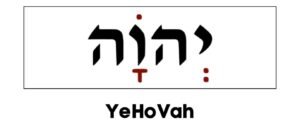
At NCAY Inc., our faith and practice are rooted in restoring what Scripture actually reveals—not later traditions that obscure it. Central to this restoration is the Sacred Name of the Creator, known in Hebrew as the Tetragrammaton: YHVH (יהוה). This four-letter proper name appears thousands of times in the Hebrew Scriptures, yet it has been systematically replaced in most English Bibles with titles such as “the LORD” or “God.”
We believe this substitution has theological consequences. Names in Scripture are not casual labels; they communicate identity, authority, covenant, and relationship. To remove or conceal the Name is to alter how the Creator is known and approached.
What Is the Tetragrammaton?
The Tetragrammaton (from Greek tetra, “four,” and grammata, “letters”) refers to the four Hebrew letters Yod–He–Vav–He (YHVH). This is not a title, but a personal proper name revealed by the Creator Himself to Moses (Exodus 3:15).
Most English translations—especially the King James Version (KJV)—replace this Name with “the LORD” (written in small capitals). This practice substitutes a common noun for a proper noun, something never done with personal names elsewhere in Scripture.
At NCAY, we use YHVH in print. The choice of V instead of W reflects modern Hebrew transliteration, though both derive from the same Hebrew letter (waw/vav). Importantly, letters do not produce sound on their own—spoken language does. Ancient pronunciation differed from modern convention, and confusion over pronunciation does not negate the legitimacy or necessity of the Name.
Waw or Vav: Pronunciation and Preservation
In ancient Hebrew, the letter ו (waw) was pronounced with a “w” sound. In modern Hebrew, it is pronounced as “v” (vav). Many Yemenite Jewish communities, who preserve older pronunciation traditions, still pronounce it with a w sound during synagogue prayers.
This historical reality raises a serious question:
If the true pronunciation of the Name was meant to be suppressed or confused—especially among Gentiles—what better method than altering pronunciation, spelling, and eventually replacing the Name altogether with titles?
NCAY acknowledges this complexity but affirms that faithful use of the revealed Name, even with imperfect pronunciation, honors the intent of Scripture far more than substituting it entirely.
“God” and “Elohim”: Titles, Not Names
In many English Bibles, “God” replaces the Hebrew word Elohim. Elohim is not a personal name; it is a common noun meaning “mighty ones” or “gods.”
Although Elohim often refers to the one Creator of Israel when paired with singular verbs, it is also used elsewhere for:
- pagan deities
- heavenly beings
- human judges or authorities
Thus, translating both Elohim and YHVH simply as “God” obscures crucial distinctions present in the Hebrew text. NCAY seeks to preserve these distinctions rather than flatten them.
“Yah”: The Name in Praise and Worship
NCAY frequently uses “Yah”, the shortened poetic form of the Sacred Name, especially in worship, teaching, and prayer.
- “Yah” appears 49 times in the Hebrew Scriptures
- It is most commonly found in songs, praise, and exaltation
- The familiar phrase HalleluYah means “Praise Yah”
There is no letter “J” in Hebrew or Greek. Forms such as “Hallelujah” reflect later linguistic developments, not the original biblical languages.
The Full Name: Yehovah
Based on linguistic study, manuscript evidence, and historical continuity, NCAY renders the Name in English as Yehovah, written from the Hebrew YHVH.
A long-standing Jewish tradition avoids pronouncing the Name aloud, substituting Adonai (“Lord”) instead. Some scholars note that the vowel points of Adonai were later associated with YHVH, producing a form similar to Yehovah. While this is not the sole basis for our usage, it does align with our independent research rather than contradict it.
Our position is simple:
The Creator revealed His Name to be known, spoken, and remembered—not hidden.
Witnesses from the Second Temple Period
Philo and Josephus
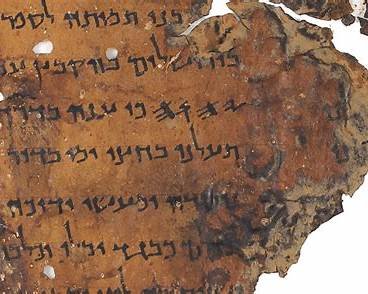
Historical testimony confirms that the Sacred Name was known and regarded as uniquely powerful during the Second Temple era.
Philo of Alexandria, a first-century Jewish philosopher, referred to the Divine Name as ineffable—not because it was unknown, but because of its holiness. His writings reflect a deep reverence for the Name while affirming its distinct identity from generic titles.
Similarly, Flavius Josephus explicitly stated that he knew the Name of God but refrained from writing it, again indicating reverence, not ignorance. This confirms that the Name was preserved, recognized, and intentionally guarded—not lost or invented later.
These witnesses undermine the claim that restoring the Name is a modern innovation. On the contrary, removing it from Scripture is the innovation.
Our Conviction at NCAY
We believe:
- The Name YHVH is a revealed personal Name, not a title
- Replacing it with “LORD” or “God” alters the meaning of Scripture
- Using the Name restores covenant identity, clarity, and relationship
- Honoring the Name aligns with the prophets, the Psalms, and the faith of Israel
- Respectful use of the Name is obedience—not presumption
For this reason, NCAY consistently teaches, writes, and worships using YHVH and Yah, while acknowledging linguistic realities without surrendering biblical integrity.
Conclusion: Remember My Name Forever
“This is My Name forever, and this is My memorial to all generations.”
— Exodus 3:15
At NCAY Inc., we are committed to proclaiming the Name and the coming reign—and to walking in all His ways. Restoring the Sacred Name is not about novelty or controversy; it is about faithfulness.
This page serves as our extended doctrinal foundation on the Sacred Name and is intentionally linked throughout our teachings, statements of belief, and educational resources.
 Previous Post
 Next Post